Whatsapp
From AI Assistant to AI Teammate: How SassyOS + Asana Redefine Collaborative Work in 2026
  • iconBy - Aaliya Yousaf.
  • iconBlog

Artificial intelligence has quickly entered the world of work—but most companies are still using it at a fraction of its potential. In most teams, AI is still a reactive assistant: answering questions, creating content, or automating isolated actions.

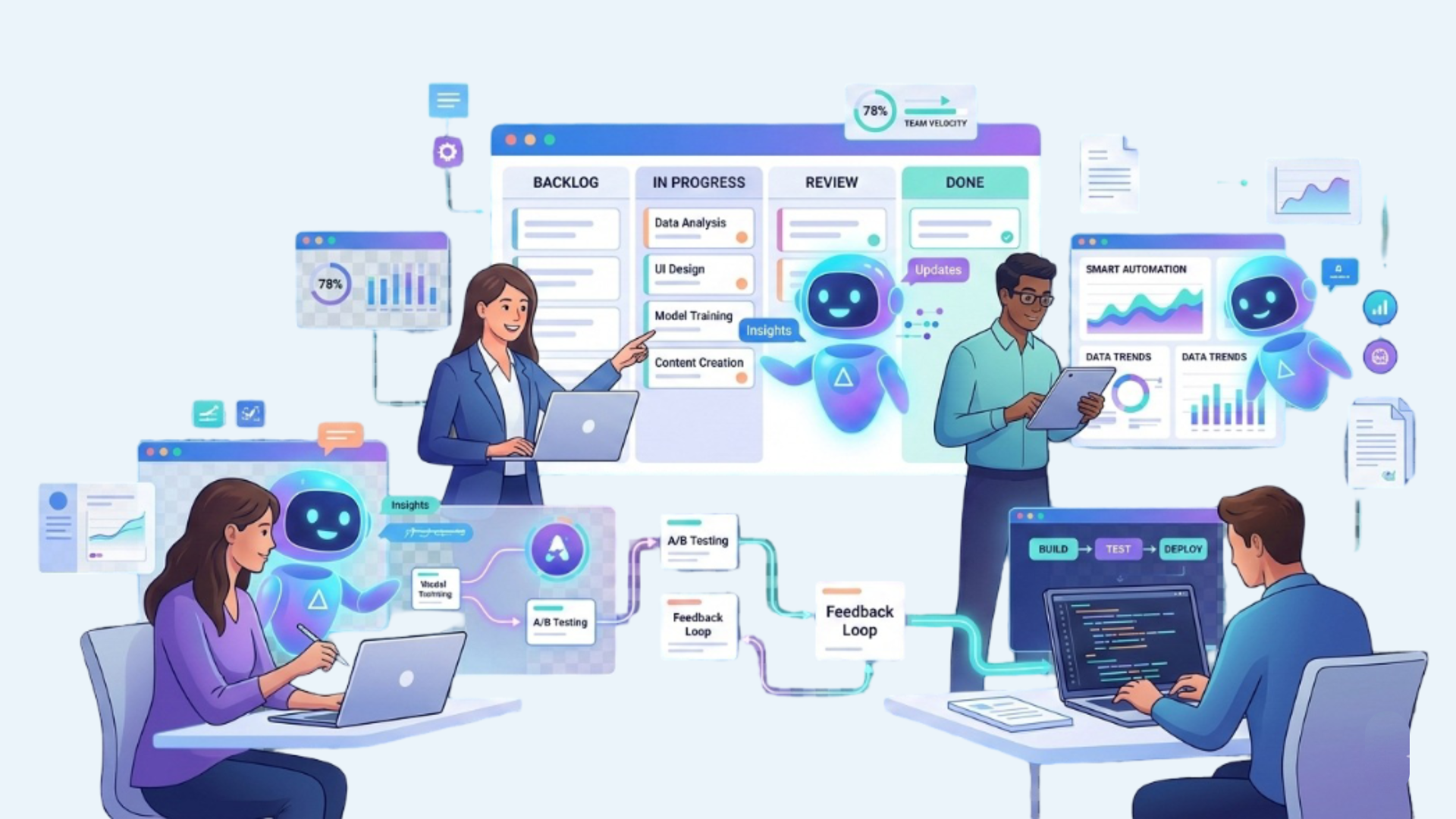
But in 2026, top-performing companies are already breaking away from this pattern. The true power of AI comes from AI that collaborates, understands the context of work, and works alongside teams—not just for them.

This is exactly where SassyOS + Asana turns the page: from a passive assistant to an active, intelligent teammate.

The Core Problem: Why Most AI Fails at Collaboration

Most AI tools are limited in their abilities because they do not have enough information about how the work they are supporting is structured, who is responsible for key decisions, and important factors such as critical deadlines and compliance constraints. As a result, AI can only provide surface-level assistance rather than meaningful collaboration.

Result?
AI outputs may look impressive, but they often miss the mark—requiring human teams to constantly reframe, re-explain, and re-correct before the work can move forward effectively.

Why Context Is the Foundation of Real AI Collaboration

Real collaboration means shared understanding. In human teams, this is achieved through:

• Clear roles
• Defined processes
• Visibility into work
• Continuous feedback

For AI, this understanding must come from where work already lives. That’s where Asana’s work graph becomes so important.

How SassyOS + Asana Enables Context-Aware AI

SassyOS infuses intelligence directly into Asana, connecting AI to real-time projects, tasks, dependencies, approvals, and team conversations. Instead of forcing AI to infer context, SassyOS ensures AI operates with the same live operational visibility as your teams—delivering accurate, context-aware insights that enhance execution and decision-making.

Category Asana monday.com SassyOS Edge (UAE Winner)
Context Awareness Works only on the basis of the user’s immediate input; lacks understanding of team roles, project structure, or dependencies. Fully aware of live projects, tasks, deadlines, ownership, and dependencies; able to forecast needs without being prompted.
Decision Support Offers generic, one-size-fits-all solutions that require human interpretation and tweaking. Provides project-level, priority-aware suggestions aligned with business objectives and workflows.
Workflow Integration Functions as a separate app or plugin, requiring manual entry or context switching between apps. Seamlessly integrated with Asana workflows, allowing AI to function directly within the context of work.
Memory & Continuity Stateless interactions; each request is handled in isolation without context of previous discussions or project knowledge. Provides constant context about live projects, past decisions, and team dynamics for cumulative collaboration.
Collaboration Level Reactive; requires user input and responds; cannot actively participate in team processes. Proactive and collaborative; provides notifications for potential risks, offers suggestions, and participates in task planning.
Business Impact Primarily speeds up individual tasks and minimizes manual work. Enhances overall project efficiency, reduces delays, and supports higher-quality decision-making across teams.
Adaptability Limited ability to adapt to changing projects; requires retraining or repeated manual input. Continuously learns from evolving project versions, providing constantly updated recommendations aligned with current workflows.
Risk Management Cannot predict conflicts or delays; relies on the user to identify potential problems. Provides real-time notifications about dependency conflicts, approval backlogs, and timeline risks to enable proactive corrective action.
Scalability Designed for individual users or isolated tasks; not suitable for large, complex project environments. Scalable from team level to department and enterprise portfolio, with contextual insights available at every level.
Compliance & Governance Offers outputs that may not align with organizational policies or audit requirements. Operational definitions and workflows are structured in alignment with security, compliance, and governance standards.

What AI as a Teammate Looks Like in Real Teams

Marketing & Growth Teams
AI works by:
• Auto summarization of campaign progress
• Flagging risks before launch deadlines
• Generating insights based on live performance data
Teams spend less time reporting—and more time optimizing.

Project & Delivery Teams
AI:
• Detects dependency conflicts
• Highlights stalled approvals
• Recommends rebalancing workload
This will reduce delays without being constantly overseen manually.

Leadership & PMOs
Executives gain:
• Portfolio-level health summaries
• Predictive risk indicators
• Decision-ready insights without manual consolidation
AI doesn’t just report—it interprets.

Why this Shift Matters in 2026

Work has changed in its very nature now.

Workplace Reality

Hybrid and distributed teams benefit from AI Teammate, shared context instead of constant meetings, faster campaign cycles, and proactive risk detection that can prevent delays.

Increasing demands of compliance requirements

This embedded intelligence ensures auditability and generates insight, not just information. Organizations that use helper-style AI will be at a disadvantage compared to those that apply AI as a truly collaborative system.

Team / Role AI Capability 1 AI Capability 2 AI Capability 3
Project & Delivery Teams Detects dependency conflicts Highlights stalled approvals Recommends rebalancing workload
Leadership & PMOs Portfolio-level health summaries Predictive risk indicators Decision-ready insights without manual consolidation

Flagging Risks before Launch deadlines

AI identifies risks early, helping teams stay ahead of deadlines and reducing manual oversight.

Generate insights based on live performance data

Teams spend less time reporting—and more time optimizing. AI doesn’t just report—it interprets.

Why SassyOS + Asana Stand Out

While other AIs may be superimposed over forms of labor, SassyOS is embedded within it.

Capability SassyOS + Asana Advantage
Work Graph Intelligence AI learns from real task, project, and dependency data
Enterprise Readiness Security, compliance, and governance according to enterprise needs
Continuous Learning AI Develops as the Project Develops
Partner Recognition Official Asana Solutions Partner

Intelligent Workflow AI

This is not AI that "sounds smart." It’s AI that operates intelligently within real workflows.

The Strategic Advantage: From Automation to Augmentation

Automation saves effort.
This improves outcomes.
SassyOS incorporates AI not at the end of decision-making but at the start. Accordingly, SassyOS:
Think faster
Decide Smarter
Deliver more consistently
AI is viewed as a force multiplier rather than simply a tool for boosting productivity.

Final Viewpoint: The Question Every Organization Must Answer

As more and more organizations continue to adopt the technology, the question won't be if you're using AI or not—but how you're using it.
So, ask yourself:
Is your AI just responding to your requests… or truly helping your teams drive success?
With SassyOS + Asana, AI is finally taking the role it was built for: not as a tool but as a full-fledged member of the team.

Frequently Asked Questions

Organizations are being super concerned with sensitive data when AI is in the picture. It is quintessential to identify how SassyOS protects data privacy by encryption, permissions, and compliance.

Readers may be curious about whether SassyOS can make its own decisions or if it will make suggestions for human approval.

It is crucial, therefore, to consider where AI collaboration can be the most beneficial and where human decisions can be made.

In a realistic world, there is a conflict of interest and interdependencies, and that is a major question with AI systems.

Organizations may be reluctant to implement AI solutions if they are difficult to learn. This question helps clarify training requirements.

It is vital to know whether there are any key performance indicators/analytics used to evaluate the performance of the success of the AI project completions.

It’s crucial to comprehend the method employed in the event of an error happening or the options obtainable to reverse an action accomplished by the AI itself.

Most companies are likely using more than one tool; therefore, it would be good to also highlight integration possibilities with other tools like Slack, Jira, or CRM systems, etc.

AI learns alongside projects, although the concept of "learning errors" might influence active projects.

Emphasizing scalability, flexibility, and cost-effectiveness keeps the blog post relevant to all businesses.

Most teams work under heavy regulations. Audit trails, approval processes, and verification for compliance could be explained in detail.

As this is a position focused on differentiation, it might be useful to further highlight the areas where your competition is lacking and how your product, SassyOS, is excelling.